
Fayette County Weekly Arrest Log
Whitewater Valley Voice offers the clearest multi-day example: its Fayette County Arrest and Summons Report spans June 5 through June 8, 2026. The publisher draws its information from Fayette County Sheriff's Department arrest summary logs. That attribution gives it weight. Still, it is a secondary publication. It is not the sheriff's database. Nor is it a live custody roster.
The report's structure is distinctly local. "Arrests & Warrants" sits apart from "Summons & Non-Custodial Entries," so keep that division intact. A person listed under a summons may have been ordered to appear without ever entering Fayette County Jail. Merging the sections into one list of jail bookings would distort the source's meaning.
No fixed weekly schedule exists for this series. Treat it as a dated multi-day report rather than an official weekly jail roster.
Read Fayette County Arrest Reports
Start with the report's date span and its category labels. Then separate publisher claims from items needing confirmation elsewhere. A sheriff-summary article may be followed by a court filing, but the article does not establish the later disposition.
- Open the dated Whitewater Valley Voice report and record its headline, publication date, and covered dates.
- Identify whether the entry is under arrests and warrants or under summonses and non-custodial entries.
- Read the location, age, charge, warrant reference, and report date only as the article presents them. Do not add missing fields.
- Use INjail Public Access to check a recent county booking, bearing in mind its rolling 30-day public window.
- Use Indiana MyCase or the Fayette County Clerk for a later cause and disposition.
- For an older missing item, request an existing, date-bounded record from the agency that created it.
The log and the official jail search answer different questions. A blotter documents selected events across a period. INjail shows whether a recent jail record exists. For something believed to have happened today, use the Daily Arrest Report process instead of waiting on a later article.
Fayette Arrest Log Entry Fields
The multi-day article offers a compact event summary. It does not expose every field inside a jail or police file. The field inventory reflects only what the published report contains.
| Published item | How to interpret it |
|---|---|
| Name | Identifies the person as listed by the article; verify identity before drawing any conclusion. |
| Age and city | Context reported by the source, not a full identity record or proof of residence. |
| Report date | A date tied to the summary; it may differ from booking or article publication. |
| Charge or warrant information | Preliminary source wording, not a conviction or final court charge. |
| Entry category | Distinguishes arrests and warrants from summons and non-custodial matters. |
| Booking photo | No official accompanying photo policy was verified. |
A booking record can hold much more. Think of an arresting agency, booking date, bond, release, transfer, and sometimes a photograph. Those details do not belong in a blotter entry unless a named source supplies them. A warrant, too, can point to an older case or a missed court date rather than a new offense.
Charges can change. They may be amended, reduced, dismissed, or diverted. The court disposition lives in a separate record. None of that appears in a summary blotter line.
Fayette Weekend Arrest Reporting
The June report covers a Friday-through-Monday span, which makes it a handy multi-day example. That proves no formal weekend cycle. No source promises a Monday article after every weekend. Holidays get no guaranteed combined report. A late story describes events that already happened, and that proves no regular delay.
Weekend and holiday checks need date discipline. Search each relevant day. Record the article's publication date separately, then look for updates or corrections. A late story is not a late arrest. An incident report date is not always a booking date. If the person may still be held, call the Fayette County Sheriff/jail at 765-825-1110. Do not guess custody from publication timing.
Need the wider picture? The countywide Fayette County recent-arrests source guide shows where booking records, court cases, and official request paths diverge.
Fayette Arrest News Is Distributed
Local coverage is incident-driven and scattered among outlets. Whitewater Valley Voice carries the strongest sheriff-summary report. WTRE, Kicks 96, the News-Examiner, WRTV, and WHIO cover selected incidents too. Together they form no complete county arrest list. A booking can happen with no news story at all. An article can also describe a summons, investigation, or warrant event. That alone does not prove a current jail stay. The Kicks 96 June 2026 local-news archive shows the archive route. Use it for finding Fayette and Connersville stories.
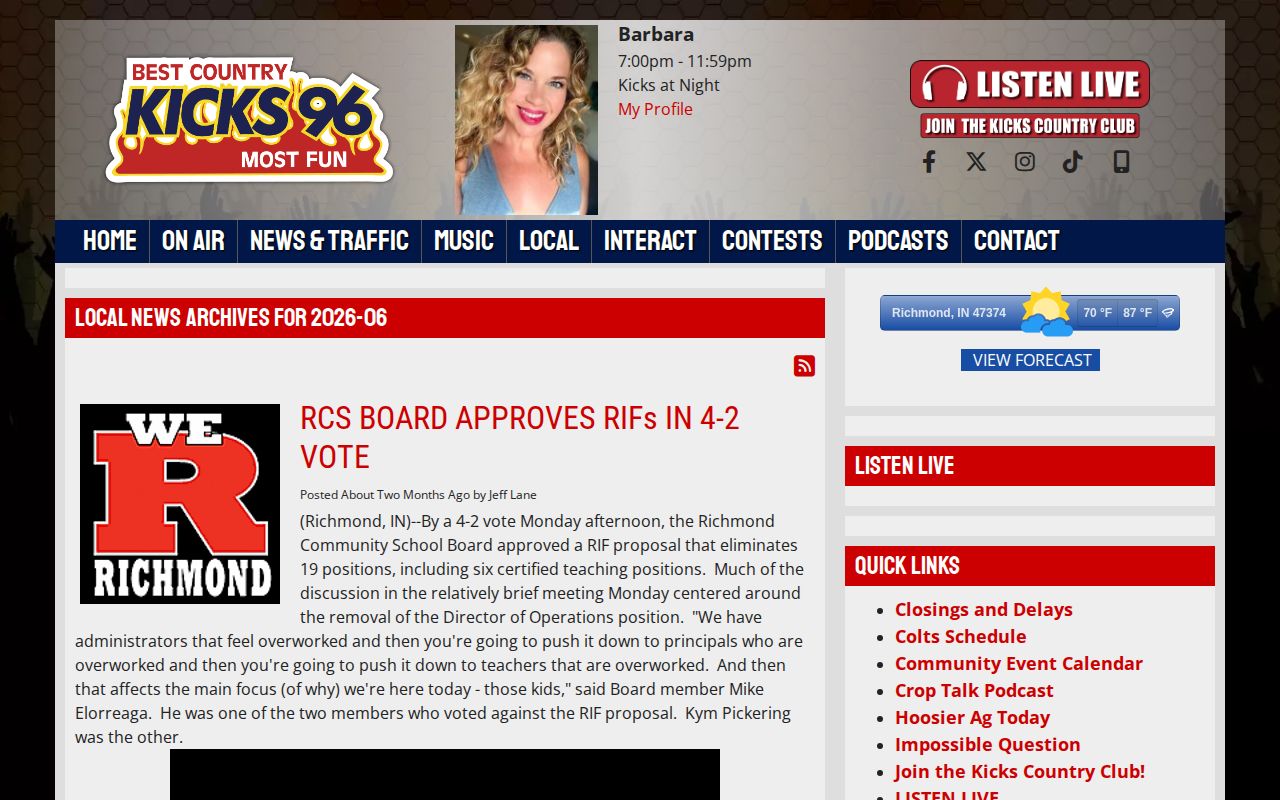
Archives aid discovery across dates. No full arrest roster or photo policy exists there. WTRE's January 2026 Fayette County incident report shows another form of regional coverage, with no fixed cadence attached.
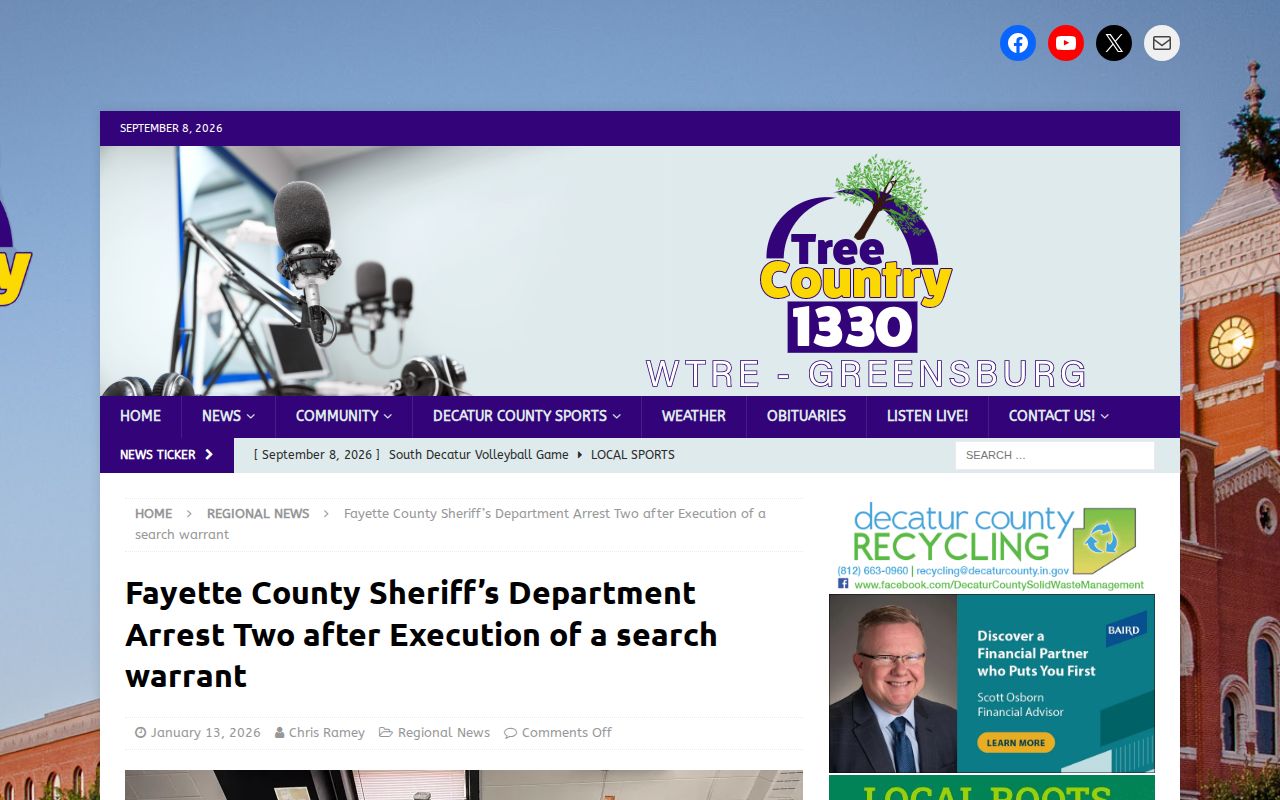
That article documents one reported incident. It is not a weekly roster, and it does not show that every Fayette County arrest lands on WTRE.
Compare Fayette Arrest Sources
Labels keep an archive honest. They separate a news archive from an official custody system, and official channels deserve the first check even when a secondary story is easier to find.
| Source | What it can show | Main limitation |
|---|---|---|
| INjail Public Access | Official recent county-jail search | Thirty-day public window; not an old archive or guaranteed same-day feed |
| Fayette Sheriff/jail | Current custody confirmation and records routing | Some records or details may require a focused request |
| Whitewater Valley Voice | Dated sheriff-summary-derived arrest and summons report | Secondary source with no guaranteed cadence or archive depth |
| Kicks 96 and WTRE | Selected local or regional incident stories | Not complete booking logs |
| MyCase and Clerk | Court filing, hearings, and disposition | Not real-time jail custody |
None of these outlets runs a Fayette County mugshot gallery. The sheriff's office offers no official photo feed either. A news photograph could be an evidence image or a scene shot. It might be a social-media picture. Or it could be a file photo. Never relabel it a jail mugshot without clear attribution. News material can also be delayed, incomplete, corrected, edited, or removed.
Older Fayette Arrest Log Records
Old records exist even when they vanish from the web. INjail shows only the last 30 days of Fayette County bookings. Whitewater Valley Voice does not say how far back its arrest-and-summons reports stay online. Nor does it say whether every report gets indexed. Treat an archive gap as a gap. Never guess a URL or borrow a report from another county to fill it.
Indiana sets retention rules for the agencies that hold these records. Daily bulletins may be destroyed after one year. Most logs sit on a five-year series. Routine incident reports often share that five-year window. Adult inmate custody files run ten years past the end of incarceration. Offense and case-file series follow their own rules. These schedules govern retention and lawful disposition, not continuous online access.
When you ask the Fayette County Sheriff's Office for a specific record, give it boundaries. Name the person, the date span, and the arresting agency if you know it. Say what you want. That might be a daily log, an arrest card, a booking or release record, or an incident report. Ask for a fee estimate. Ask for a response time up front. If a request is denied, request the written statutory basis. The sheriff's office publishes no Fayette-specific fee schedule or turnaround promise.
For court history, search MyCase and call the Fayette County Clerk at 765-825-1813. The Indiana Archives and Records Administration retention resources walk through local schedules. Library and newspaper collections can surface dated coverage. None of that promises an old booking photo survives.
Note: A missing article or expired online result only means the item is not posted there, not that no arrest record exists.
Public Record Search
Sponsored Results